We raised our Series A
We've raised $18M to build the developer cloud that should have existed years ago. Here's what we're building next.
Alex Chen
Co-founder & CEO
We have some news to share: StackBlaze has raised a $18M Series A led by Benchmark, with participation from our existing investors at Sequoia and a handful of founders we deeply respect. We're genuinely thrilled, and also a little surprised by how quickly this came together.
The news
The round closed last week. We've been heads-down since then making sure it doesn't change how we operate day to day, which is to say, we're still the same small team shipping things and talking directly to users. We're sharing this now because we think you deserve to know, and because we want to tell you ourselves rather than have you read it in a press release.
Why we raised
Honestly? We weren't planning to raise this year. We're profitable on a per-customer basis and the team is lean. But we kept running into the same constraint: there are infrastructure investments we want to make, more regions, better hardware, faster networking, that require capital upfront and pay off over years, not quarters. Venture funding is the right tool for that kind of bet.
We also had the luxury of choosing partners who understand infrastructure businesses and have patience for the long game. The conversations with Benchmark were unusually direct and honest, which is what we were looking for.
What we're building with it
Three specific areas, in rough priority order:
- More regions: We're currently in North America and Europe. We're adding Southeast Asia (Singapore) and South America (São Paulo) this year. This has been our most-requested feature by a wide margin.
- Managed databases expansion: Postgres and Redis are solid. We're adding managed MySQL (MariaDB-compatible), managed MongoDB-compatible (via FerretDB), and managed Kafka. These will be first-class citizens, private networking, automated backups, point-in-time recovery, not afterthoughts.
- Team and organization features: Audit logs, granular RBAC, SSO (SAML/OIDC), and spend controls at the organization level. We've been humbled by the number of larger engineering teams trying to use StackBlaze with workarounds for things that should just be built in.
Who led the round
Peter Fenton at Benchmark will be joining our board. Peter has worked with infrastructure companies for a long time and his feedback during diligence was substantive enough that we actually changed a few things about how we think about our pricing model. That's the kind of investor relationship we wanted.
A note to our users
If you've been using StackBlaze, you've been building this with us. Every bug report, every "this workflow is frustrating," every feature request in the Discord, that feedback has shaped what we've built. The fact that enough people found this useful to build real businesses on it is the only reason we were in a position to raise on good terms.
Raising money doesn't change what we're optimizing for. We're still trying to build the platform we wished existed when we were developers, one that gets out of your way, is honest about its limitations, and doesn't surprise you with bills. The capital just means we can move faster toward that.
Thank you for using StackBlaze. We're just getting started.
Alex Chen
Co-founder & CEO at StackBlaze
Member of the founding team at StackBlaze. Writes about infrastructure, engineering culture, and the systems that keep production running.
More from the blog
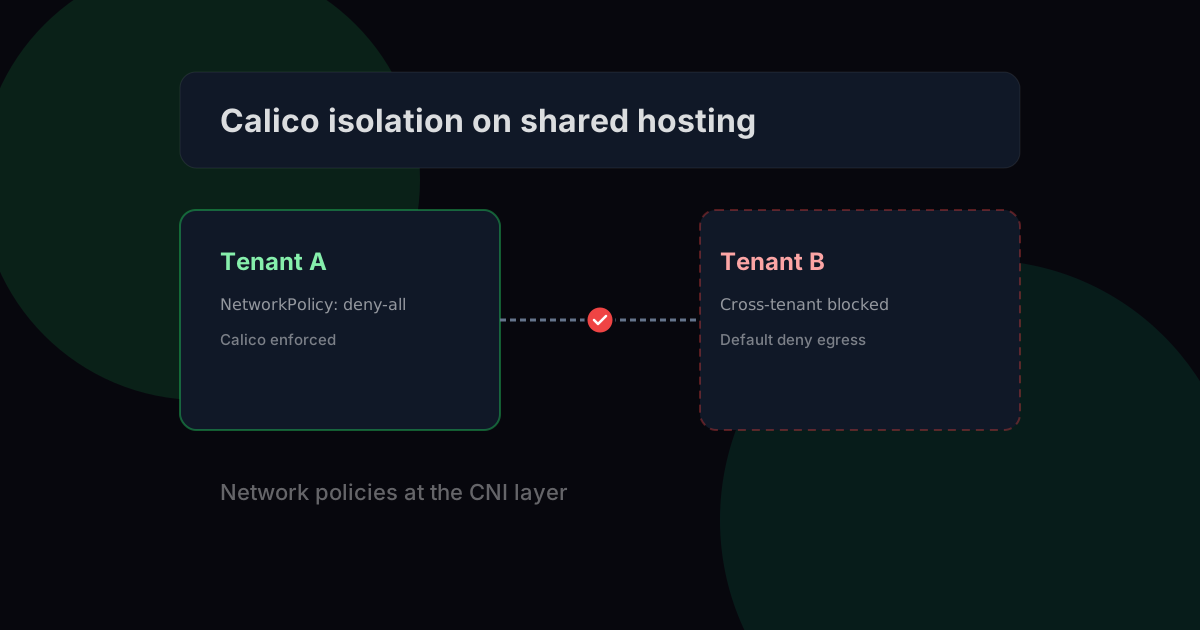
How Calico network policies isolate tenants on shared hosting
Shared Kubernetes does not have to mean shared trust boundaries. Calico enforces network isolation, Linkerd provides automatic mTLS between services, and Falco detects runtime threats, three layers that keep tenants separated on shared infrastructure.
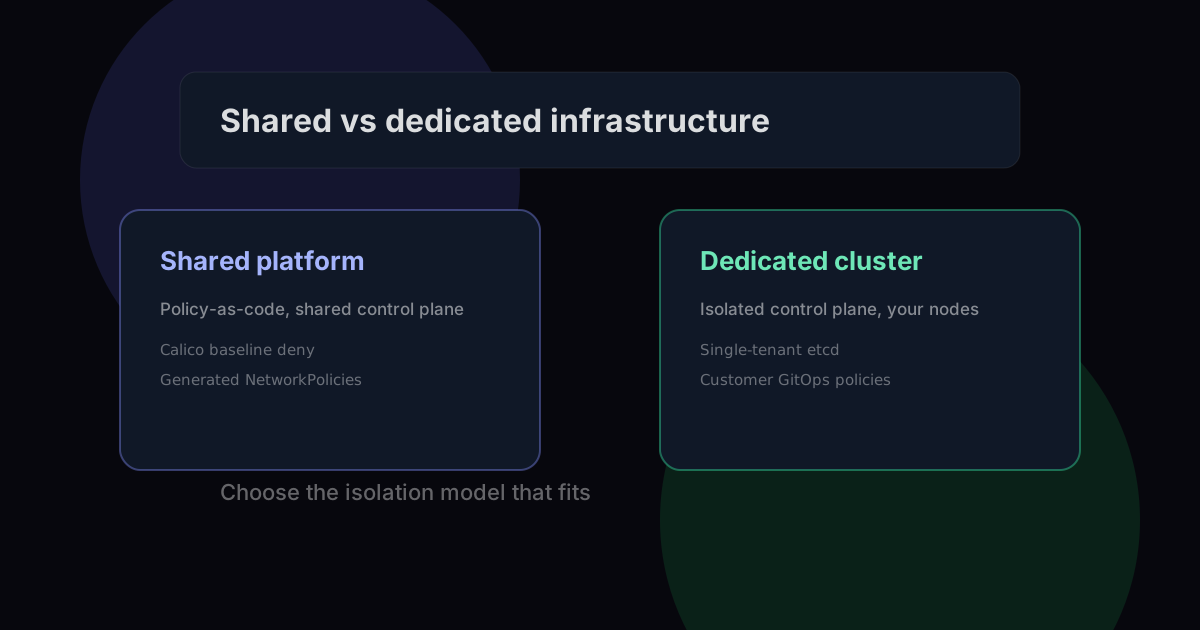
Shared platform vs dedicated clusters: control plane isolation and policy-as-code
Policy-as-code on a shared platform gives you guardrails without operational overhead. Dedicated clusters add an isolated control plane, single-tenant nodes, and customer-owned policy boundaries, here is how to choose and what changes under the hood.
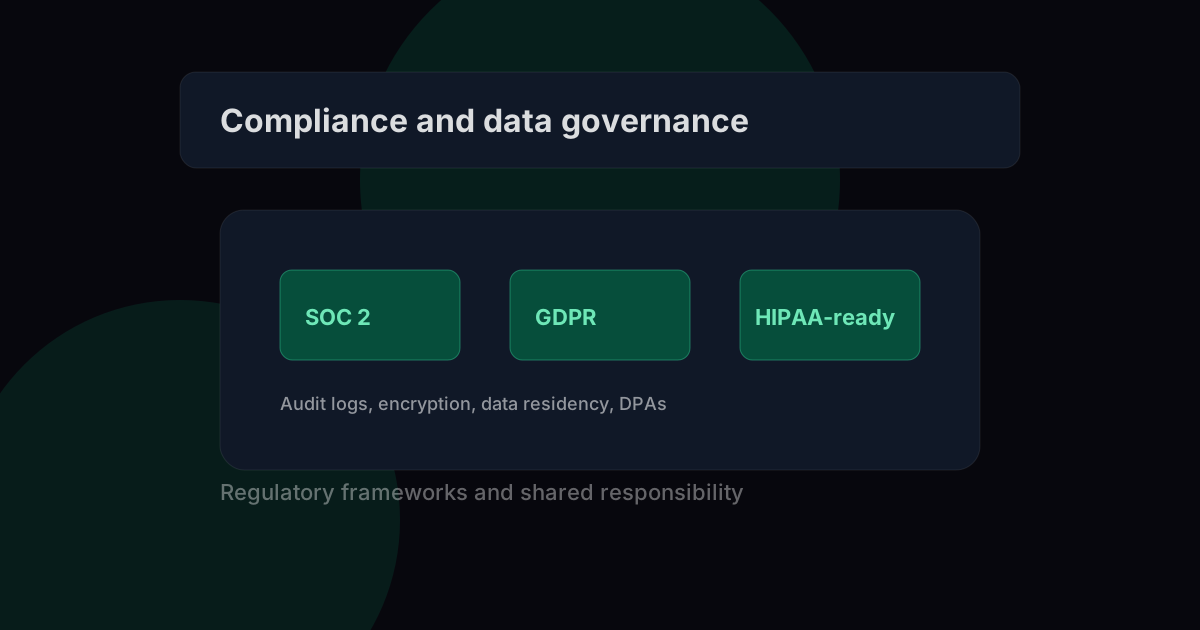
Regulatory compliance and data governance on StackBlaze
SOC 2, GDPR, HIPAA-readiness, data residency, encryption, audit logs, and DPAs, a detailed map of how StackBlaze controls align with common regulatory frameworks and what you own vs what the platform certifies.